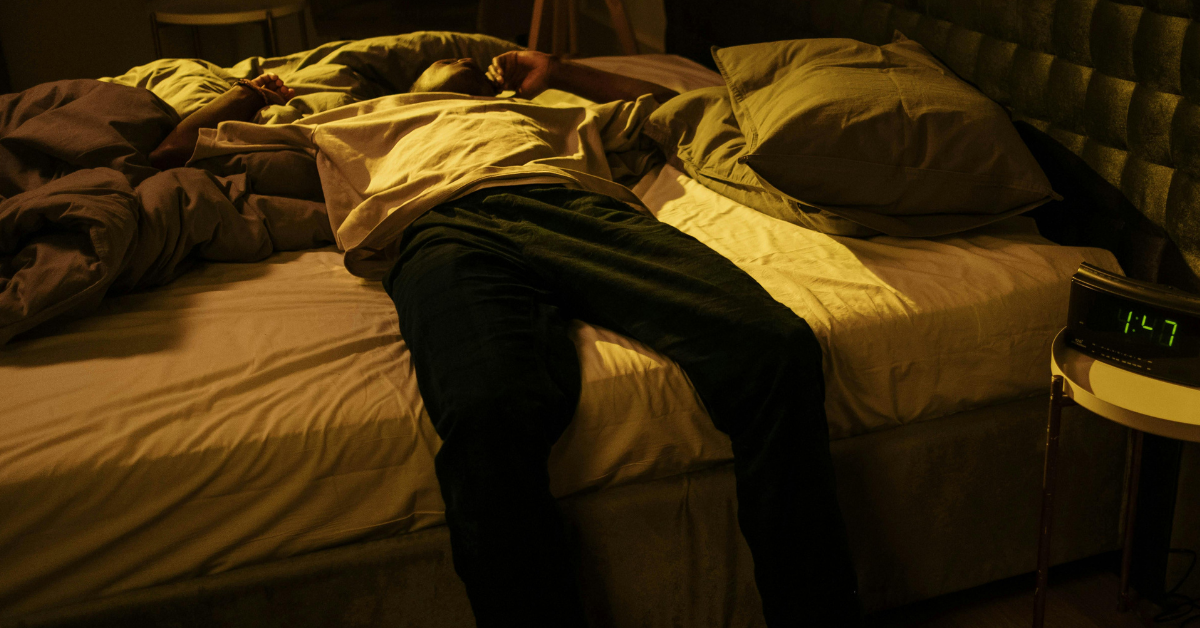

Depression is one of the most common mental health conditions yet it remains so misunderstood. Millions of people live with it for months, years, and even decades without a formal diagnosis. And, it’s not because there are limited treatment options. No, there are great options when it comes to getting help for depression.
What holds people back from getting necessary help is that people suffering may not even recognize it in themselves. Understanding the signs is the first step to changing that.
What is Depression?
Depression is not a mindset, a weakness, or a failure of willpower. It’s a neurobiological disorder with measurable effects on the brain and body.
At the chemical level, depression disrupts the balance of key hormones: serotonin, dopamine, and norepinephrine. These messengers regulate mood, motivation, sleep, and the ability to feel pleasure. When they’re out of balance, the effects are felt everywhere.
Brain scans tell a similar story. In people with depression, the prefrontal cortex, which is the part of the brain that handles decision-making and emotional regulation, shows reduced activity. The hippocampus, responsible for memory, can shrink with prolonged illness. Cortisol levels rise. Inflammation increases. The immune system is affected.
The physical impact of depression is real and well-documented. That’s why effective treatment for depression is clinical, not motivational. The brain is genuinely functioning differently, and it needs more than a change in perspective to heal.
Depression and Sadness are Not the Same
This distinction between depression and sadness matters more than most people realize. They’re often used interchangeably in everyday conversation, but clinically, they’re fundamentally different experiences.
Sadness is a natural, healthy human emotion. It comes up in response to something specific, like a loss, a disappointment, or a difficult life event. It ebbs and flows, and tends to lift as circumstances change or time passes. However, sadness is related to its cause, and it coexists with other emotions. A grieving person can still laugh at dinner, still feel moments of connection, still experience glimpses of hope.
Depression operates differently. It’s not a reaction to a specific event. Rather, it often arrives without a clear trigger, and it does not respond to positive circumstances the way typical emotions do. Someone in a depressive episode can receive good news and feel nothing. They can be surrounded by people who love them and feel completely alone. Depression flattens the emotional landscape rather than occupying one part of it.
The persistent nature of depression is key to understanding its difference. When the weight doesn’t lift after some time, when it begins to erode functioning, relationships, and physical health, what a person is experiencing has moved well beyond ordinary sadness.
10 Signs and Symptoms of Depression
1. Sadness or Emptiness Has Lasted More Than Two Weeks
A bad week is normal. Two weeks of persistent sadness, hopelessness, or emotional numbness without a clear cause is not. That duration is the clinical threshold that separates a low mood from a depressive episode, and it’s the point at which professional evaluation becomes important.
2. Loss of Interest in Activities That Once Brought Pleasure
Hobbies, relationships, food, and pastimes that once felt meaningful now feel like nothing. This isn’t indifference or boredom. It’s anhedonia, the clinical inability to feel pleasure, and it’s one of the most telling signs that something neurological is happening.
3. Significant Changes in Sleep
Too much sleep. Too little. Waking at 3 a.m. with a restless mind. Logging eight hours and still feeling exhausted. Depression disrupts the body’s ability to rest regardless of how much time is spent in bed. Persistent sleep problems that have no other explanation are worth taking seriously.
4. Appetite and Weight Changes
Depression can kill appetite or trigger emotional eating. Neither is a matter of discipline. Significant, unexplained weight changes over a short period are a recognized clinical marker of depression, reflecting just how broadly the condition affects the body.
5. Difficulty Concentrating, Remembering, or Making Decisions
Depression doesn’t just affect mood. It affects thinking. Struggling to focus, retain information, or make simple decisions is a recognized neurological symptom of the illness, not a personal failing. What looks like laziness from the outside is often the brain working against itself.
6. Persistent Feelings of Worthlessness or Guilt
Depression warps how you see yourself. The inner narrative becomes repetitive, critical, and detached from reality. Feeling like a burden, a failure, or responsible for things outside one’s control are not character flaws. They are symptoms, and they respond to treatment.
7. Using Alcohol or Substances to Cope
When substances become a way to get through the day, that’s a sign that something deeper needs attention. Alcohol and other substances can temporarily dull emotional pain, but over time they worsen the chemical imbalance driving the condition. Outpatient treatment mental health programs designed for co-occurring conditions can address both at once.
8. Unexplained Physical Symptoms
Depression lives in the body as much as the mind. Chronic headaches, back pain, digestive issues, and fatigue that no amount of rest resolves are all common physical expressions of the condition. When a medical cause has been ruled out, the root is often emotional.
9. Withdrawal and Social Isolation
Canceling plans. Not returning calls. Pulling away from people who care. Depression makes connection feel impossible and isolation feel safer. The problem is that isolation feeds the illness, making it harder to recover the longer it goes on.
10. Thoughts of Self-Harm or Suicide
This is the most urgent sign on this list. Thoughts of self-harm, suicidal ideation, or a persistent sense that life is not worth living are a medical emergency. They are also treatable.
A Depression Diagnosis Is Not One-Size-Fits-All
Depression is not a single, uniform condition. It presents differently from person to person, and the type of depression someone is experiencing shapes how it’s best treated.
Major Depressive Disorder (MDD) is what most people picture when they hear the word depression. Persistent low mood, negative thoughts, loss of interest, and impaired daily functioning that lasts at least two weeks.
Persistent Depressive Disorder (PDD) is a longer-lasting, lower-grade form of depression that can go undetected for years. It may feel less acute than MDD, but its chronic nature takes a significant toll over time.
Seasonal Affective Disorder (SAD) follows a seasonal pattern, most commonly emerging in fall and winter when daylight hours shorten. It often resolves in spring, but that doesn’t make it any less real or disruptive during the months it’s present.
Postpartum Depression affects new mothers and, less commonly, new fathers. It goes well beyond the “baby blues” and can involve intense anxiety, emotional withdrawal, and difficulty bonding with a newborn.
Bipolar Depression occurs during the depressive episodes of bipolar disorder. It can look similar to MDD on the surface, but the treatment approach is meaningfully different, which is why accurate diagnosis matters.
Knowing which type of depression is present informs the treatment path. At Milton Recovery, clinical assessment is the starting point for every individual we work with. Effective care begins with an accurate diagnosis.
Why Early Treatment for Depression Changes Outcomes
Left untreated, depression tends to get worse. Episodes become longer, more frequent, and harder to treat. It all compounds.
The evidence on early intervention is consistent. People who pursue treatment for depression sooner recover faster, relapse less, and function better over time. Waiting is rarely a neutral choice. Seeking care is a clinical decision. It has nothing to do with strength or resilience.
What Outpatient Treatment for Mental Health Looks Like
Outpatient treatment mental health programs offer structured, clinically rigorous care that does not require stepping away from daily life. Patients participate in treatment multiple times a week, going home at the end of every session.
At Milton Recovery, outpatient programming is built around evidence-based modalities that address both the mental, emotional, and physical facets of depression. Our Partial Hospitalization Program (PHP) and Intensive Outpatient Program (IOP) leverage various forms of clinical intervention, including:
- Cognitive Behavioral Therapy (CBT): Restructures the distorted thinking patterns that depression reinforces
- Dialectical Behavior Therapy (DBT): Builds emotional regulation, distress tolerance, and interpersonal effectiveness
- Psychiatric Evaluation and Medication Management: Addresses underlying chemical imbalances when appropriate
- Group Therapy: Provides peer connection, shared experience, and accountability
- Holistic and Wellness Supports: Mindfulness, psychoeducation, and practical life skills that support sustainable recovery
Outpatient care is best suited for individuals whose depression is affecting their daily functioning but have a stable living environment and do not require round-the-clock supervision.
Help for Depression Is Available at Milton Recovery Centers
Being depressed convinces people that the way they feel right now is the way they will always feel. That is not true, and it is not supported by what decades of clinical research show about recovery. Effective, individualized help for depression exists.
At Milton Recovery, our clinical team works with each person to build a treatment plan that reflects their specific history, symptoms, and goals. Recovery is not a one-size-fits-all process, and the care provided here is not either.