

For patients facing severe opioid use disorder, Medication-Assisted Treatment (MAT) should be understood as more than a prescription, a dosage chart, or a monthly appointment. Severe OUD can be relentless, physically consuming, and psychologically destabilizing, especially in a drug supply increasingly shaped by fentanyl. That is why better MAT support must begin with individualized, evidence-informed care that responds to the patient’s actual level of need.
Recent NIH-funded research published in JAMA Network Open found that adults with opioid use disorder who received higher maximum daily doses of buprenorphine had significantly lower rates of later emergency department or inpatient behavioral health care. This is compared with those receiving FDA-recommended doses between 8 mg and 16 mg. The study analyzed health care claims from 35,451 adults with OUD, adding weight to the argument that some patients may be under-treated, not unmotivated. For MAT programs, effective care must be precise, flexible, and strong enough to help patients move out of craving and crisis.
What Is Opioid Use Disorder and What Differentiates The Severity?
Opioid use disorder is a medical condition. It involves a problematic pattern of opioid use that causes significant distress, impairment, or danger in a person’s life. This can involve prescription opioids, heroin, fentanyl, or other opioid substances. OUD is not defined by occasional opioid exposure alone. It is also not the same as taking prescribed medication appropriately under medical supervision. Instead, opioid use disorder develops when opioid use becomes difficult to control. It continues despite harm and begins to reshape a person’s physical health, emotional stability, relationships, responsibilities, and sense of safety.
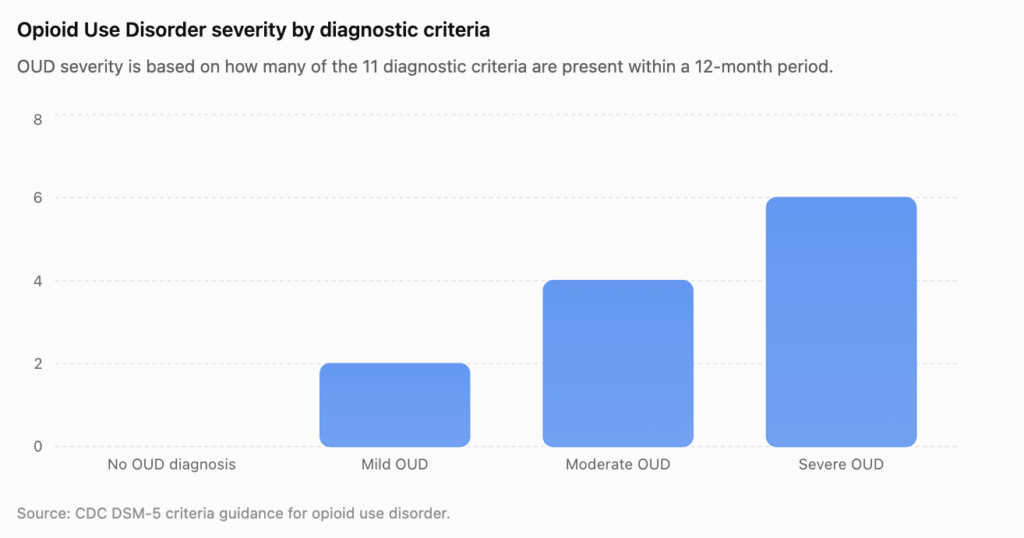
Clinicians diagnose opioid use disorder when a person meets at least two of eleven diagnostic criteria within a twelve-month period. This criteria may include
- Taking opioids in larger amounts (increased tolerance) or for longer than intended
- Unsuccessful attempts to stop
- Intense cravings
- Spending significant time obtaining or recovering from opioids
- Continued use despite relationship or health consequences
- Withdrawal symptoms
- Giving up important responsibilities and activities because of opioid use
The CDC notes that the severity of Opioid Use Disorder is based on how many diagnostic criteria are present: mild OUD involves two to three criteria, moderate OUD involves four to five criteria, and severe OUD involves six or more. The severity of opioid use disorder is not simply about how often someone uses opioids.
A person may have severe OUD for many reasons. These may include the depth of physical dependence, the intensity of cravings, the presence of withdrawal, or repeated overdose risk. Severe OUD may also involve worsening mental health symptoms, an inability to stop despite serious consequences, or major disruption to daily life.
Severe OUD can feel less like a choice and more like a survival trap. The body fears withdrawal. The brain searches for relief. The person may feel pulled back into use, even when they desperately want something different.
This distinction matters because treatment should match the level of need. Mild opioid use disorder may require early intervention, counseling, monitoring, and education. Moderate or severe OUD often requires more structured support, which may include Medication-Assisted Treatment, medical monitoring, therapy, psychiatric care, relapse prevention planning, peer support, and long-term recovery services.
For patients facing severe Opioid Use Disorder, effective care must go beyond asking someone to “just stop.” It must help stabilize the body, calm cravings, reduce overdose risk, address co-occurring mental health concerns, and create enough safety for real recovery to begin.
Why Fentanyl Has Changed the Treatment Landscape
Fentanyl has changed the treatment approach because its potency, unpredictability, and unforgiving risk profile exceed what many older opioid treatment models can safely manage. The CDC notes that illegally made fentanyl drives many fentanyl-related harms and overdoses and has become a major contributor to overdose deaths in the United States.
For patients with opioid use disorder, this means cravings, withdrawal, overdose risk, and treatment instability can be more intense and less predictable than clinicians once expected. Medication Assisted Treatment (MAT) programs must now respond with greater urgency, closer follow-up, and more individualized medication strategies rather than assuming standard approaches will work for every patient. In the fentanyl era, effective care has to be both medically precise and profoundly human: helping patients stabilize their bodies, quiet the ferocity of withdrawal, reduce overdose risk, and stay connected to care long enough for recovery to become possible.
The Difference Between Dependence, Withdrawal, and Addiction
Dependence, withdrawal, and addiction are connected, but they are not the same. Dependence means the body has adapted to regular opioid use and may need the substance to function without feeling sick. A person can become physically dependent on opioids even when taking medication exactly as prescribed, which is why dependence alone does not automatically mean someone has opioid use disorder.
Withdrawal is what can happen when opioids are reduced or stopped after dependence has developed. Symptoms may include anxiety, sweating, nausea, vomiting, diarrhea, muscle aches, insomnia, restlessness, chills, and intense physical discomfort.
Addiction, or opioid use disorder, involves a more complex pattern of compulsive use, cravings, loss of control, and continued opioid use despite serious consequences. The CDC explains that clinicians do not count tolerance and withdrawal toward an OUD diagnosis when a person takes opioids only under appropriate medical supervision.
This distinction matters because confusing dependence with addiction can increase shame, disrupt appropriate medical care, and prevent patients from receiving the right level of support. Effective MAT programs understand the difference by treating withdrawal and cravings medically, while also addressing the behavioral, emotional, and psychological patterns that keep opioid use disorder alive.
What Is Medication-Assisted Treatment?
Medication-Assisted Treatment, often called MAT, is an evidence-based approach to treating opioid use disorder that combines FDA-approved medications with clinical support, counseling, behavioral therapies, and long-term recovery planning. MAT is not replacing one addiction with another. It is a medical treatment designed to reduce cravings, ease withdrawal symptoms, lower overdose risk, and help patients regain enough stability to participate more fully in treatment and daily life. For people facing severe opioid use disorder, MAT can be especially important because the body and brain may be caught in a painful cycle of dependence, fear, craving, and relapse risk. By helping stabilize the nervous system and reduce the relentless pull of opioid use, MAT gives patients a stronger foundation for healing.
How MAT Supports Opioid Recovery
MAT supports opioid recovery by helping patients move out of immediate physical distress and into a more stable place where treatment can actually take hold. When cravings and withdrawal symptoms are overwhelming, it can be extremely difficult for a patient to focus on therapy, rebuild routines, repair relationships, or make safe decisions.
Medications used in MAT can help quiet that urgency, reduce the risk of return to use, and protect patients during the early and often fragile stages of recovery. This does not make recovery effortless, but it can make recovery more possible. For many patients, MAT creates the first real pause between craving and action, allowing them to engage in counseling, address trauma or mental health symptoms, and begin rebuilding trust in themselves and their care team.
Common Medications Used in MAT Programs
Common medications used in MAT programs for opioid use disorder include buprenorphine, methadone, and naltrexone. Each medication works differently, and the right option depends on the patient’s medical history, substance use pattern, withdrawal risk, treatment goals, and level of clinical need. A strong medication assisted treatment program does not force every patient into the same model. We carefully evaluate what will help that individual stabilize safely and sustainably from both a medical and clinical observation.
Buprenorphine is a partial opioid agonist, meaning it can reduce cravings and withdrawal symptoms without producing the same level of opioid effect as full agonists when taken as prescribed.
Methadone is a full opioid agonist used in highly regulated treatment settings and can be effective for patients with significant physical dependence or long histories of opioid use.
Naltrexone is an opioid antagonist, which means it blocks opioid effects and is typically used after a patient has fully detoxed from opioids.
Why Medication Alone Is Not the Full Treatment Plan
Medication can be lifesaving, but medication alone is not the full treatment plan. Severe opioid use disorder often develops alongside trauma, grief, chronic stress, depression, anxiety, unstable housing, family rupture, legal pressure, medical complications, or years of shame and isolation. If treatment only addresses the physical dependence without addressing the emotional and behavioral patterns around opioid use, patients may remain vulnerable to relapse, crisis, and disconnection from care.
Effective MAT programs pair medication with therapy, psychiatric support, relapse prevention planning, peer support, case management, family education, and aftercare. The goal is not only to help the patient stop using opioids. The goal is to help them build a life where stability, connection, and recovery can last.
Why Better MAT Support Matters for Severe OUD
Better MAT support matters for severe opioid use disorder because patients with advanced Opioid Use Disorder (OUD) are often navigating more than physical dependence. They may be living with relentless cravings, repeated withdrawal, fentanyl exposure, overdose risk, trauma, depression, anxiety, chronic shame, fractured relationships, and the exhaustion of trying to stop while their body is screaming for relief. In this stage of illness, weak support can become dangerous.
A missed appointment, an under-treated craving, or a dismissive clinical interaction can push a patient closer to relapse, emergency care, or overdose. Strong MAT programs understand that stabilization is not passive. It requires careful medication management, consistent follow-up, behavioral health support, peer connection, and a care team willing to stay close when recovery becomes difficult. For patients facing severe OUD, better MAT support can mean the difference between cycling through crisis and finally having enough safety to begin rebuilding.
Severe Opioid Use Disorder Requires More Than Standard Care
Severe opioid use disorder requires more than standard care because the condition itself is rarely simple, linear, or contained to substance use alone. Patients may arrive in treatment after years of instability, medical complications, legal pressure, grief, trauma, homelessness, family rupture, or repeated attempts at recovery that did not hold.
A basic appointment schedule and a fixed medication approach may not be enough for someone whose cravings remain ferocious, whose withdrawal symptoms are destabilizing, or whose life circumstances make recovery difficult to sustain. These patients need individualized care that responds to real-time symptoms, not assumptions.
That may include more frequent check-ins, flexible medication adjustments, co-occurring mental health treatment, case management, family education, relapse prevention planning, and support after setbacks. Severe OUD is not a failure to comply. Often, it is a signal that the patient needs a stronger, more responsive clinical structure around them.
Higher Doses of Buprenorphine and Improved Outcomes
Higher doses of buprenorphine may help improve outcomes for some patients with opioid use disorder, especially when standard dosing does not adequately control cravings, withdrawal, or instability. Mentioning back to the NIH-funded analysis published in JAMA Network Open examined health care claims from 35,451 adults with OUD and found that patients receiving higher maximum daily doses of buprenorphine had significantly lower rates of later emergency department or inpatient behavioral health care compared with patients receiving FDA-recommended doses between 8 mg and 16 mg.
The findings do not mean that every patient needs a higher dose, or that dosing should ever be adjusted without medical supervision. They do suggest that some patients may be under-treated when care relies too heavily on rigid dose ceilings instead of individualized clinical response. For MAT programs, this research reinforces an important point that the right dose is not about doing more medication for its own sake. It is about helping the patient reach enough stability to stay alive, stay engaged, and keep moving toward recovery.
Frequently Asked Questions About MAT for Severe Opioid Use Disorder
Medication-Assisted Treatment can bring up a lot of questions for patients and families, especially when opioid use disorder has become severe. Some people worry that MAT means a person is not “really sober,” while others fear that medication will be lifelong or difficult to stop. These concerns are common, but they are often shaped by stigma rather than clinical reality. MAT is an evidence-based treatment approach designed to reduce cravings, manage withdrawal symptoms, lower overdose risk, and help patients stay engaged in recovery long enough to rebuild stability. For patients facing severe OUD, MAT can be one of the most important tools available.
Is MAT Safe for Severe Opioid Use Disorder?
Yes, MAT is considered safe and effective for opioid use disorder when it is prescribed and monitored by qualified medical professionals. Medications like buprenorphine, methadone, and naltrexone are FDA-approved for treating OUD and are used to help stabilize patients who may be at high risk for relapse, withdrawal, or overdose. Safety depends on the patient’s medical history, substance use patterns, co-occurring conditions, other medications, and level of support. That is why strong MAT programs do not simply hand someone a prescription and send them away. They evaluate the full clinical picture, monitor symptoms, adjust treatment when needed, and combine medication with counseling, recovery planning, and ongoing care.
How Long Should Someone Stay on MAT?
There is no single timeline for how long someone should stay on MAT. Some patients use medication for months, while others remain on MAT for years or longer because it continues to protect their recovery and reduce overdose risk. The right length of treatment should be based on clinical stability, cravings, withdrawal symptoms, relapse history, mental health needs, support system, and the patient’s long-term recovery goals.
For severe opioid use disorder, stopping medication too quickly can increase the risk of return to use, especially if the patient is still facing cravings, emotional instability, or exposure to fentanyl. MAT should never be rushed because of shame, pressure, or the false belief that medication means failure. A careful taper, if appropriate, should always be planned with a medical provider.
Can Buprenorphine Help With Fentanyl Addiction?
Buprenorphine can help many patients with opioid use disorder involving fentanyl, but treatment may need to be more individualized than older models of care assumed. Fentanyl is highly potent and can create intense physical dependence, severe withdrawal symptoms, and powerful cravings. Buprenorphine works by attaching to opioid receptors in the brain in a way that can reduce withdrawal and cravings while lowering the risk of overdose when taken as prescribed.
Recent research has also suggested that some patients may benefit from higher maximum daily doses of buprenorphine, particularly when standard dosing does not provide enough stability. This does not mean every patient needs a higher dose, but it does mean MAT programs should assess symptoms carefully and avoid one-size-fits-all dosing. For patients using fentanyl, the goal is not simply to start medication. The goal is to find a treatment plan strong enough to help them stay safe, engaged, and supported through recovery.
Getting Help for Severe Opioid Use Disorder at Milton Recovery Centers
Severe opioid use disorder can make a person feel trapped between fear, withdrawal, cravings, and the quiet exhaustion of trying to survive another day. At Milton Recovery Centers, treatment is built to meet that reality with structure and clinical support. Through Partial Hospitalization and Intensive Outpatient care, adults facing addiction and co-occurring mental health concerns can receive the guidance they need to stabilize, rebuild routines, strengthen relapse prevention skills, and stay connected to recovery.
For patients who need Medication Assisted Treatment, ongoing therapy, accountability, and a treatment team that understands the weight of opioid addiction, Milton Recovery Centers provides a place to begin again with dignity. Recovery does not have to start with feeling ready. Sometimes it starts with being tired enough to ask for help and brave enough to take the next step. Give our admissions team a call today.